
Luxury was once defined primarily by exclusivity, precious materials, and the idea of owning something created for a particular occasion. Today, luxury is evolving.
Beauty and craftsmanship remain essential, but the modern wearer also expects design to understand real life. A luxury object should not only be admired. It should be useful, intuitive, adaptable, and capable of moving with the person who owns it.
This is why versatile and transformable bags have become increasingly relevant in contemporary fashion. One bag can be carried in different ways, respond to different situations, and express more than one side of the wearer’s personal style.
It has one physical form—but more than one life.
Modern Life Does Not Stay in One Place
A contemporary lifestyle is defined by movement and transition. A woman may begin the day with a business meeting, continue to a creative workspace, travel across the city, meet someone for dinner, or leave directly for a short trip. Her schedule, environment, and needs can change within a few hours.
Traditional fashion categories do not always reflect this reality. The clear separation between a work bag, daytime bag, travel bag, and evening bag is becoming less relevant when one thoughtfully designed piece can move between several of those roles. A versatile bag adapts to these transitions.
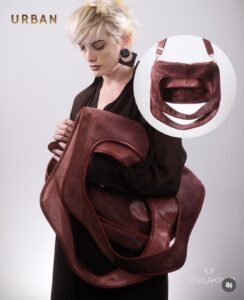
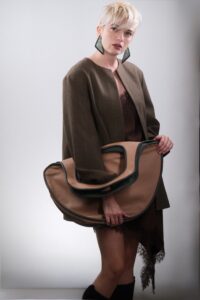
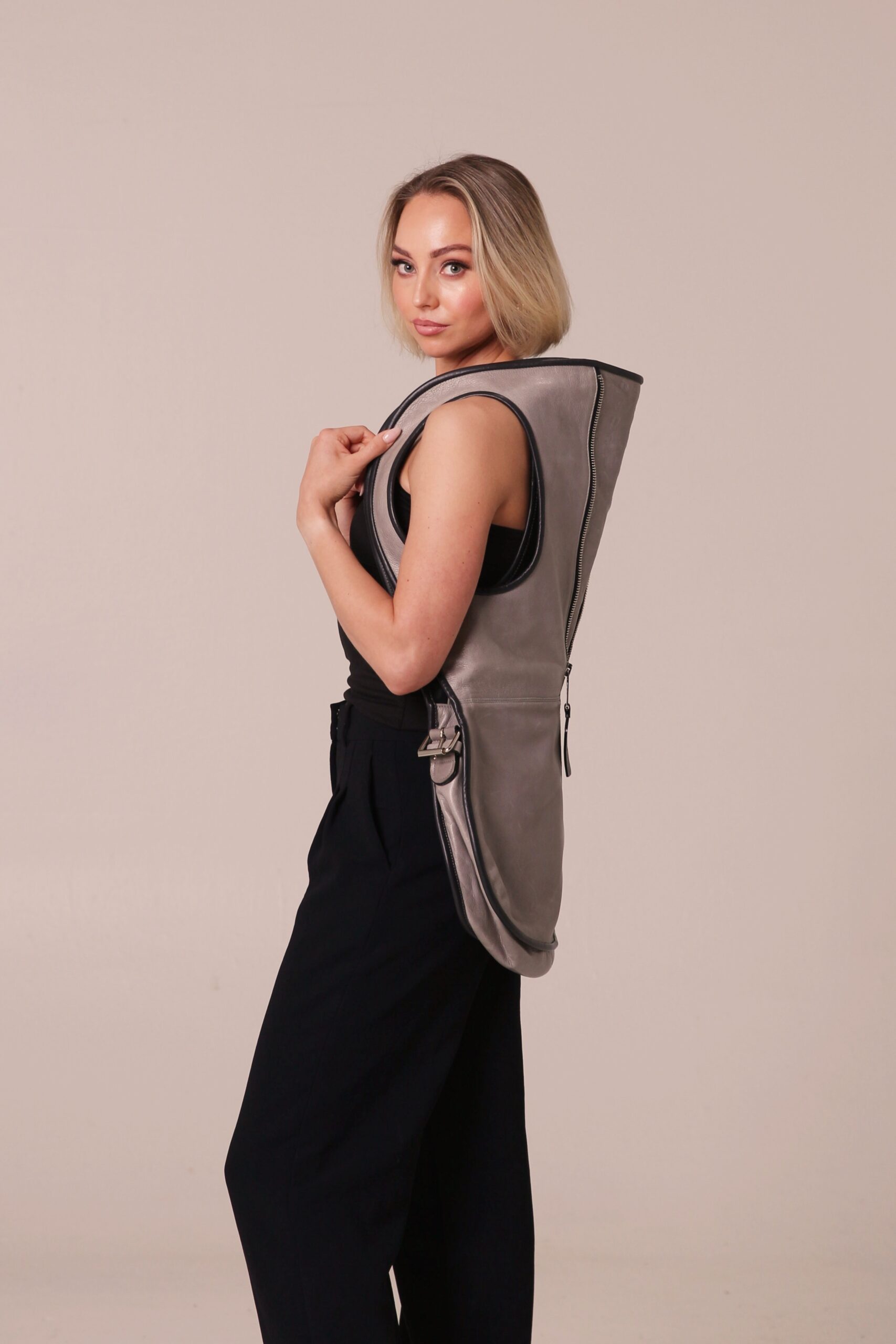
It may be carried by hand for a more structured and polished appearance, worn on the shoulder when freedom of movement is needed, or transformed into a backpack for travel and longer days. Its shape may expand, fold, tighten, or change depending on what is being carried and how the wearer wants to style it.
The bag does not require the woman to organize her life around its limitations. It responds to her.
Versatility Is More Than an Additional Strap
A multifunctional bag is not created simply by attaching one more strap to a conventional design. True versatility begins with the construction.
The designer has to consider how the bag’s shape behaves in every version, how its weight is distributed, where the handles and straps are positioned, how the closures function, and whether the transformation feels natural.
Every mode should have a clear purpose. The bag must remain comfortable, secure, and visually resolved regardless of how it is carried.
This may involve:
- Adjustable or removable straps
- Multiple carrying positions
- A silhouette that changes in volume or proportion
- Sections that fold, open, or close
- Detachable elements
- Convertible handles
- Interior organization that supports different uses
- Structural details that allow the bag to transform without losing its identity
A successful transformable bag should never feel unfinished in one of its versions. Each form must appear intentional—as though the bag was designed specifically for that way of carrying it.
From Transformable Clothing to Transformable Bags
My interest in multifunctional bags developed naturally from my earlier work as a fashion designer.
While designing clothing, I was drawn to garments that could be transformed, adjusted, and worn in more than one way. A piece could change its silhouette, function, or character according to how it was fastened, folded, wrapped, or styled.
That approach gave the wearer a more active role in the design. The garment was not completely defined before it was worn. The person wearing it participated in its final expression.
When I began developing handbag concepts, I carried the same design philosophy with me. I did not want the bag to remain a fixed object with only one prescribed purpose. I wanted to explore how construction could create movement, choice, and transformation. The result is a bag that changes with the wearer while preserving a distinct design identity.
One Object Can Express Different Sides of Your Style
Personal style is not always consistent in the most literal sense.
The same person may want a clean and professional look in the morning, something relaxed and practical during the day, and a more expressive silhouette in the evening. These are not different identities. They are different dimensions of one individual life.
A versatile bag allows those dimensions to exist within one object.
Changing the strap, folding the body, adjusting the volume, or carrying the bag in a different position can alter how the entire design is perceived. It can move from structured to relaxed, from practical to sculptural, or from understated to statement-making.
The material also plays an important role.
Leather may soften and respond to movement in a way that allows the bag to take on different forms. Textiles, vegan materials, denim, and combinations of contrasting surfaces can create other types of transformation. The material must support both the construction and the intended experience of the design.
Versatility is therefore both functional and visual. The bag changes how it works, but it can also change how it feels.
A Bag That Adapts to Different Situations
A truly versatile bag is not expected to become every possible type of bag. Its value comes from adapting intelligently to several realistic situations.
For work, it may need enough space for documents, a laptop, a notebook, and personal essentials. The design should feel polished and comfortable, with a structure that supports what is being carried.
For travel, the priorities may change. Secure closures, ease of movement, adjustable straps, accessible compartments, and the ability to keep the hands free become more important.
For a meeting, presentation, or dinner, the same bag may be carried in a more refined way or adjusted into a cleaner, more sculptural form.
The transformation should not feel like a complicated process that requires instructions every time. Good design makes the possibilities understandable and easy to use.
A bag is most valuable when its functions become part of the wearer’s natural routine.
Versatility Creates a More Personal Relationship
When an object works in only one situation, the relationship with it can remain limited.
A multifunctional bag becomes part of more moments. It travels more often, participates in different settings, and gradually becomes connected to a wider range of memories and experiences. The wearer also discovers her own way of using it.
She may prefer one carrying style for work and another for travel. She may adjust the shape differently depending on the outfit or what she needs that day. Over time, the design becomes personal because its possibilities are interpreted through her lifestyle. This is especially meaningful in a world where fashion is often consumed quickly and replaced just as quickly.
A versatile, well-designed piece encourages a different relationship with ownership: fewer objects chosen with greater intention, used more often, and appreciated for longer.
Modern Luxury Is Freedom of Choice
Luxury is not only about having more. It can also mean having a beautifully made object that gives you more possibilities. It means not needing to change your bag every time your schedule changes. It means comfort without sacrificing design, and function without losing individuality.
Versatility creates freedom:
- Freedom to move
- Freedom to change the way a piece is worn
- Freedom to respond to different situations
- Freedom to travel with fewer objects
- Freedom to express different parts of personal style
- Freedom to participate in the design
This freedom is one of the most relevant forms of contemporary luxury. It respects the wearer’s time, movement, and individuality.
Innovation Should Have a Purpose
As a designer, I am naturally drawn to innovation. But innovation should never exist only to make an object appear different. A transformation has value when it improves the relationship between the object and the person using it.
Every additional function must have a reason. A removable section should solve a real need. A convertible strap should create meaningful comfort. A change in shape should support a different use or offer a genuinely new way of wearing the bag.
The most successful innovative design often appears simple once it is complete. The complexity belongs to the development and construction—not to the experience of the wearer.
When innovation, function, material, and aesthetics are balanced, the transformation becomes an essential part of the design rather than a decorative feature.
A Statement Piece Can Still Be Practical
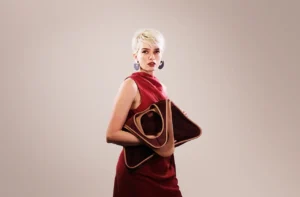
Functionality does not require visual neutrality. A multifunctional bag can also be a statement piece. Its silhouette, material, proportions, construction, and transformation can give it a strong identity.
In fact, the way a bag changes may become its most recognizable design feature. A sculptural form can still be comfortable. An unconventional bag can still support a laptop or travel essentials. A practical piece can still create the focal point of an outfit.
The idea that function and fashion must exist on opposite sides is increasingly outdated. Contemporary design has the opportunity to unite them.
The most interesting pieces often appear where those two needs meet.
One Bag, More Than One Life
A versatile bag reflects the reality that our lives are not static. We move between places, responsibilities, environments, and moods. We need objects that can follow that movement while preserving beauty, quality, and character.
For me, designing a transformable bag means creating more than a product. It means creating a system of possibilities—one that the wearer completes through her own choices.
At UniUkiyo, versatility is not an additional feature placed on top of a design. It is part of the original concept.
Our bags are created to move, transform, and respond to different moments without losing their individual identity. They are designed for women who value innovation, comfort, function, and a distinctive point of view. Because modern luxury is not defined only by what a piece is.
It is also defined by everything it can become.