
We live in a time of speed.
Fashion is produced faster, presented faster, purchased faster, and often replaced before an object has had the chance to become part of our lives. New colors, proportions, and silhouettes appear continuously, creating the feeling that what we already own is no longer relevant.
Accessibility and mass production are not automatically synonymous with poor quality, just as a higher price does not automatically guarantee excellence. But when speed and low cost become the primary goals, something is often sacrificed: the quality of the material, the precision of the construction, the originality of the design, or the time required to make an object well.
Many products are created to belong to a moment. A timeless handbag is created to continue beyond it.
Timeless Does Not Mean Trendless
A timeless bag does not have to be conventional, neutral, or visually quiet.
It can be oversized. It can be sculptural, colorful, transformable, or immediately recognizable. It can reflect the fashion of the moment and still remain relevant long after that particular moment has passed.
Timelessness does not mean refusing change. It means creating a design with enough identity, quality, and purpose to survive change.
Trends can introduce a new proportion, color, material, or way of carrying a bag. Oversized bags, for example, have returned with a different attitude: softer, more relaxed, and often carried under the arm or folded like an oversized clutch. That way of wearing a bag may feel especially current, but the design can remain valuable beyond the season if its form continues to function in other ways.
The question is not whether a bag participates in a trend. The question is whether it has something to offer when the trend moves on.
Timelessness Begins With Intention
A timeless handbag does not happen accidentally. Before the first piece of leather is cut, the designer must understand why the bag should exist. What is its purpose? Who will carry it? How should it move? What should it hold? How will it feel against the body? What makes its form different—and what gives that difference meaning?
Without a clear intention, design becomes decoration. A strong concept connects every part of the bag: its shape, dimensions, material, construction, handles, closures, interior, and way of carrying. Each decision supports the same idea. This creates coherence.
A coherent design does not depend on a visible logo or temporary trend to explain its value. Its character can be understood through proportion, silhouette, detail, and the experience of wearing it.
That is where timelessness begins: not with the absence of personality, but with the presence of a clear point of view.
The Material Determines How a Bag Will Live
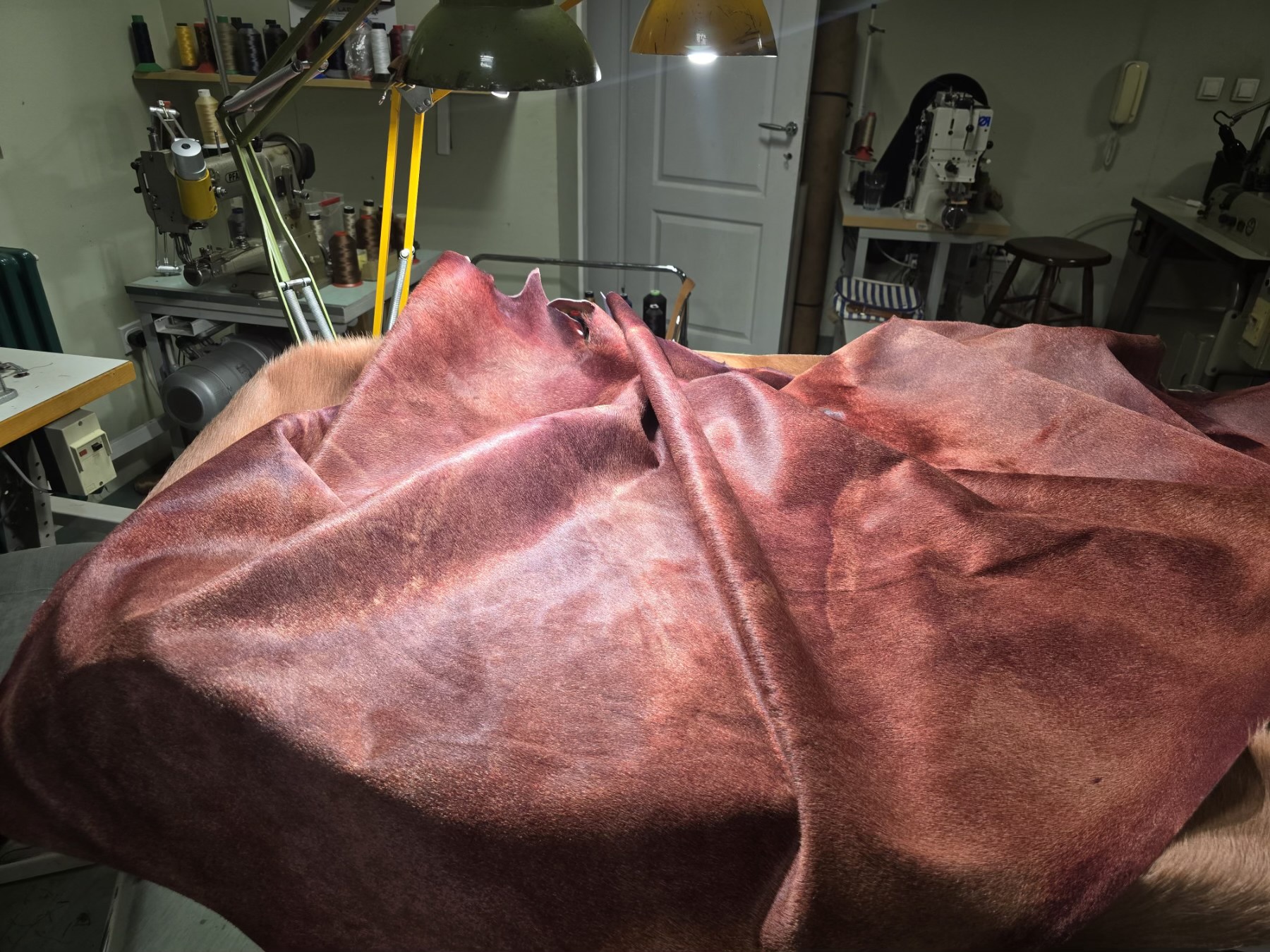
Leather is not simply a surface or a color. It is part of the bag’s structure, movement, durability, and future. When working in small series, limited editions, or custom production, a designer can pay close attention to the individual qualities of the material. The selection is not based only on appearance.
The origin, thickness, flexibility, strength, grain, finish, texture, and hand feel of the leather all matter. The designer must understand whether it can support the intended construction and how it will respond to folding, stitching, weight, tension, and repeated use.
A leather selected for a structured work bag may require different characteristics from one chosen for a soft, oversized silhouette. A transformable bag needs material that can move and change form without losing its integrity. A sculptural design requires the correct balance between flexibility and support. There is no single leather that is perfect for every bag.
The quality lies in choosing the right leather for the right design.
Good Leather Becomes More Personal With Time
One of the most beautiful qualities of natural leather is that it does not remain untouched by life. With use, it can soften, develop depth, and respond to the habits of the person carrying it. The handle begins to reflect the hand. The body moves according to how the bag is held and what it carries. The material gradually develops an individual character.
This natural evolution should not be confused with premature deterioration. A well-selected and properly constructed leather bag can age with dignity. It does not need to remain visually frozen to retain its value. Its beauty may become richer because it carries evidence of use, movement, and time.
A timeless bag is not one that never changes. It is one that changes beautifully.
Craftsmanship Is the Architecture Behind the Beauty
The exterior shape may attract attention first, but the construction determines whether a bag can truly last.
Craftsmanship is present in the elements that are immediately visible and in many details the wearer may never consciously notice:
- The accuracy of the pattern
- The direction in which the leather is cut
- The reinforcement of areas exposed to tension
- The precision and consistency of the stitching
- The treatment and finishing of the edges
- The balance and attachment of handles
- The placement of closures
- The strength of the lining
- The quality and weight of the hardware
- The relationship between structure and flexibility
- The way the bag carries weight when it is full
These decisions require knowledge, patience, and time.
Handcraft does not mean that every visible detail has to appear mechanically identical. Its value lies in the direct relationship between material, maker, and object. A skilled artisan observes how a particular piece of leather behaves and adjusts the work accordingly. This sensitivity is increasingly rare in a system built around speed and exact repetition.
A handmade bag carries the trace of human judgment.
Small-Series Production Creates Space for Attention
Mass production is designed to repeat the same object efficiently and at scale. Small-series and custom production operate differently.
When fewer pieces are made, there is more space to inspect the material, refine the construction, respond to variations, and give attention to individual details.
This does not mean that every small-production item is automatically superior. The value depends on the knowledge, standards, and integrity behind it. But small-scale work allows for a level of involvement that becomes difficult when speed and volume control the process.
For an independent designer, the relationship with the product is often direct. The person who developed the concept remains involved in selecting materials, refining proportions, resolving construction, and evaluating the final piece.
The distance between the original idea and the completed object becomes smaller.
The result carries more of the designer’s intention.
Custom-Made Is More Than Personalization
Customization is often reduced to the addition of initials or a choice between several colors. A truly custom-made approach can go much deeper.
It can involve the selection of leather, color combinations, lining, hardware, straps, proportions, carrying options, and functional details. The final bag can respond to the person’s wardrobe, lifestyle, body, profession, and way of moving through the world. This creates something that mass production cannot easily reproduce relevance on an individual level.
A bag becomes timeless when it continues to make sense in the life of the person who owns it. When the material, size, color, and function have been selected with that person in mind, the relationship with the object becomes more enduring.
Customization is therefore not only about exclusivity.
It is about connection.
Proportion Gives a Bag Its Presence
Proportion alone does not make a design timeless, but it gives the bag its physical and emotional presence.
The relationship between width, height, depth, handles, and the human body determines whether the bag feels balanced. Even an unconventional silhouette needs internal harmony.
An oversized bag must still understand the body carrying it. A miniature bag must justify its scale through function or expression. A work bag should hold what it promises without becoming visually heavy or physically uncomfortable.
A transformable bag presents an additional challenge: its proportions must work in more than one form.
When a design becomes a shoulder bag, clutch, crossbody, or backpack, each version should feel complete. The bag should not appear as though one mode is the original and all others are compromises.
The best proportions often feel intuitive, even when the calculations and construction behind them are complex.
Function Extends the Life of Design
A bag may be beautifully made, but if it does not work for the person carrying it, it will remain in the wardrobe.
Function is one of the essential conditions of timelessness.
A bag that adapts to work, travel, meetings, everyday movement, or evening plans has more opportunities to become part of life. Comfort, interior organization, secure closures, adjustable straps, and different carrying options all influence how often it will be used.
Multifunctionality can extend that relationship even further.
When one bag can transform or be worn in several ways, it is not limited to a single outfit or occasion. Its character can change while its identity remains recognizable.
Function does not diminish design.
Function gives design a future.
Character Cannot Be Manufactured by Following a Formula
There is a difference between a recognizable trend and a recognizable design identity.
Trend-driven products often repeat the same shapes, colors, and details until the market becomes visually uniform. The object may feel immediately familiar, but not necessarily memorable.
A handbag with character carries the perspective of the person who created it.
That character may be found in a curve, an unusual construction, a particular relationship between softness and structure, or an unexpected way of transforming the bag. It can be subtle or expressive, but it must feel authentic to the concept.
For an independent brand, design character is especially important. Without the need to reproduce an established commercial formula, the designer has greater freedom to explore a personal visual language.
This is how a bag becomes recognizable without needing to announce itself.
A Timeless Bag Does Not Need to Be Anonymous
The idea of timeless fashion is often associated with black, beige, simple lines, and designs that attract very little attention.
Those pieces can certainly be timeless—but they are not the only possibility.
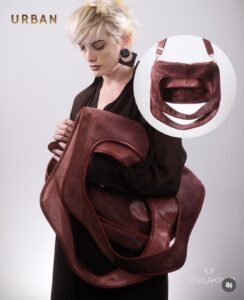
A burgundy sculptural bag can become a signature. An oversized silhouette can remain relevant because of the way it moves and transforms. A distinctive curved form can be worn for years because it belongs to the designer’s language rather than one temporary trend.
Timelessness is not invisibility.
A design can be bold and enduring when its character comes from a genuine concept rather than a passing visual effect.
The objective is not to create a bag that looks like everything else so that it never appears dated. The objective is to create something original enough to retain meaning beyond the moment in which it was introduced.
The Price Reflects More Than the Finished Object
When comparing a mass-produced bag with a handmade or custom-made design, the price difference is often immediately visible. What is less visible is everything contained within that difference.
The price of a carefully made bag reflects more than material alone. It includes concept development, pattern construction, prototypes, corrections, material selection, skilled labor, hand finishing, hardware, small-production costs, and the time required to make the piece properly.
It also reflects what has not been accelerated. Time has been allowed for the design to develop. The material has been chosen for a reason. The construction has been considered beyond the first impression.
A lower price may make a product easier to access, but repeated replacement also has a cost. A piece selected with greater intention, worn frequently, and kept for years creates a different kind of value. The true question is not only: How much does this bag cost? It is also: How long will it remain meaningful?
Timelessness Is a Relationship
No designer can determine timelessness alone.
A bag becomes timeless through the relationship between the object and the person who carries it.
The designer creates the possibility through quality, character, function, and craftsmanship. The wearer completes it by choosing the bag, using it, caring for it, and allowing it to become part of her personal history.
Over time, the bag may become connected to a profession, a city, a journey, an achievement, or an entire period of life. It may eventually be repaired rather than replaced, preserved rather than discarded, or passed from one person to another.
At that point, it is no longer only a fashion product.
It has become an object with memory.
Beyond Trends, There Is Identity
At UniUkiyo, timelessness does not mean creating bags without risk, distinction, or emotion. It means designing beyond the pressure of one season. It means selecting leather according to the needs of the form, developing proportions that work with the body, preserving the knowledge of handcraft, and creating pieces in small series or through a customized process that allows every detail to receive attention. It means understanding that functionality can be luxurious, that innovation can be enduring, and that a statement bag can remain relevant long after a trend disappears.
Most of all, it means respecting the relationship between the maker, the material, the design, and the person who will carry it. A timeless handbag is not defined by how successfully it follows its moment.
It is defined by how powerfully it continues beyond it.