
A handbag has always been an important part of an outfit. It can complete a look, introduce color, create contrast, or communicate something about personal style.
But today, a bag represents much more than the final accessory added before leaving home. It has become part of the way a woman organizes her day, moves through the city, travels, works, and transitions between different moments of her life. A bag does not simply follow an outfit. It follows a lifestyle.
The right bag has to understand the woman who carries it: what she needs, where she is going, how she moves, and how many different roles she may step into before the day is over.
The Bag Has Moved to the Center of the Look
In recent years, bags have become increasingly central to fashion styling. The focus is no longer limited to a bag perfectly matching the shoes, belt, or color of an outfit. Instead, the bag can be the main visual statement—the element around which the rest of the look is built.
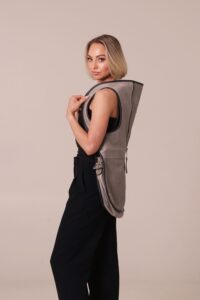
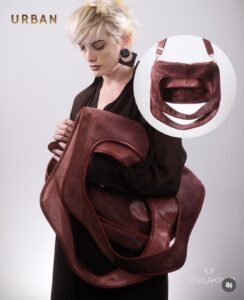
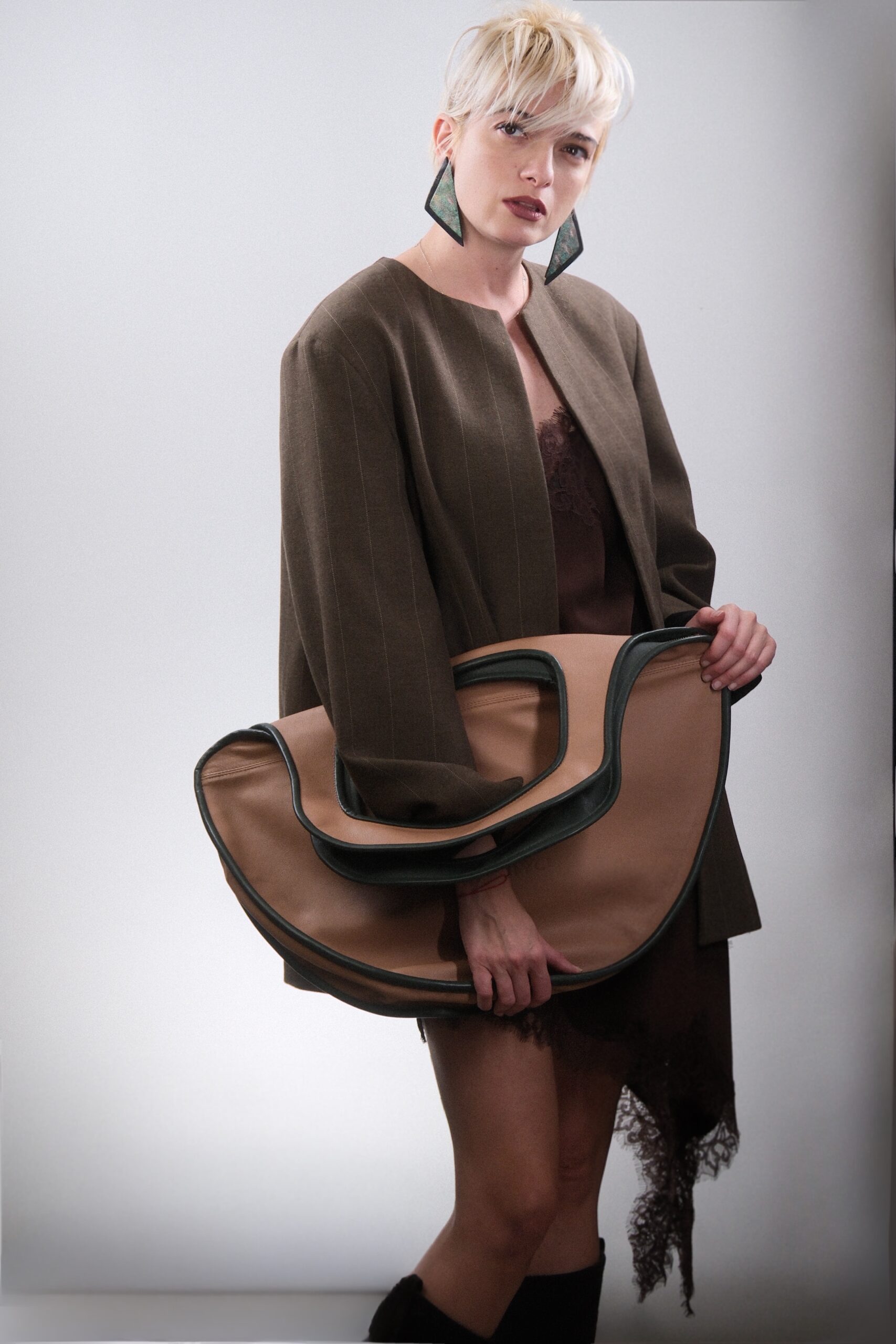
Current oversized silhouettes reflect this shift particularly well. Large, soft bags are often carried casually under the arm, held close to the body, or folded naturally as part of the way they are worn. The gesture feels relaxed and intuitive, even when the design itself is sculptural and carefully constructed.
At the other end of the spectrum, miniature bags continue to appear as highly focused fashion objects. They may carry only the essentials, but their proportion, shape, color, and character can transform an entire look.
Between these two extremes exists a complete world of possibilities: business bags, travel bags, shoulder bags, clutches, crossbody styles, convertible designs, and everyday pieces that move between categories.
The modern bag is no longer defined by a single rule of styling or proportion. Its value comes from the relationship between design, function, and the person carrying it.
Function Is the Beginning of Good Design
Before a bag becomes a fashion statement, it has to serve a purpose.
A beautiful everyday bag that is uncomfortable, difficult to carry, or disconnected from the wearer’s real needs quickly loses its appeal. Functionality is not separate from luxury. True luxury should make life feel more considered, comfortable, and effortless.
The right bag depends on how it will be used.
A woman who carries a laptop, documents, cosmetics, chargers, and personal essentials needs a different type of bag from someone attending an evening event. A frequent traveler may prioritize secure closures, flexible ways of carrying, interior organization, and a shape that remains comfortable in motion. A woman moving between meetings and social plans may need a design that works in more than one setting.
Good design begins with these questions:
- What does the bag need to hold?
- How will it be carried?
- How long will it be worn?
- Where will it travel?
- Does it need to adapt during the day?
- How should it feel against the body?
- Can it support everyday life without losing its character?
The answers influence the bag’s proportion, construction, handles, straps, interior, weight, closure, and material.
Function should never be an afterthought added to a beautiful shape. It should be part of the design from the beginning.
One Woman Can Live Many Different Moments in One Day
Modern life rarely belongs to only one setting.
A woman may begin her morning at work, continue to a meeting, stop at a studio or showroom, travel across the city, meet a friend for dinner, and return home late in the evening. On another day, the same bag may accompany her through an airport, a hotel, a presentation, or a weekend away.
These are the “different roles” a bag follows—not fixed identities, but the changing rhythms of a woman’s life.
She may be a professional, entrepreneur, designer, artist, traveler, mother, partner, friend, or simply someone protecting a few hours for herself. Often, several of these roles exist within the same day. Her bag becomes a quiet companion through all of them.
It carries practical objects, but it can also carry parts of her personal world: a notebook, an idea, a favorite lipstick, something connected to her work, a small object from a journey, or everything she needs to feel prepared.
This is why a bag often becomes more personal with time. It is not only worn. It is lived with.
The Everyday Bag No Longer Has to Look Conventional
Business and everyday bags were once expected to follow a familiar visual language: neutral colors, structured forms, discreet details, and very traditional proportions.
Those options still have their place, but fashion has evolved. A bag can be professional and unconventional at the same time. It can carry a laptop while also having a sculptural silhouette. It can be practical without becoming visually anonymous.
An everyday bag may be minimal, architectural, soft, oversized, geometric, or transformable. It can remain appropriate for a meeting while expressing the individuality of the person carrying it. This is where independent design has a particular strength.
A designer bag does not need to rely on a highly visible logo to communicate value. Its identity can be expressed through form, proportion, construction, leather, movement, and detail.
The bag itself becomes recognizable because of the design—not because it follows a familiar formula.
A Bag Can Carry the Entire Outfit
There are days when the clothing remains intentionally simple: a monochromatic look, a tailored suit, denim and a shirt, a long dress, or a quiet combination of timeless pieces. In these moments, the bag can become the focal point.
An unexpected silhouette, expressive texture, sculptural construction, or carefully chosen color can give the entire outfit character. The bag can introduce tension into a classic look or create structure within something softer and more relaxed.
This does not mean that every bag must be bold. A neutral bag can still make a strong statement when its design is distinctive.
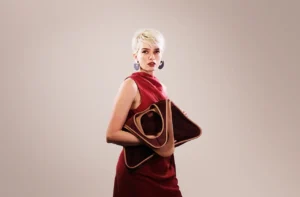
Black, beige, brown, burgundy, deep green, and other versatile shades can move easily across seasons and wardrobes. When combined with an original form, these colors create a piece that is easy to wear but never generic.
The result is a bag that does not need to match every outfit perfectly. It creates a relationship with each outfit in a different way.
Evening Bags Have a Different Kind of Function
For an evening event, formal occasion, or dinner, the practical needs often become smaller. A compact bag may only need to hold a phone, cards, keys, and lipstick. Its function is more focused, allowing the design to become lighter, more minimal, or more decorative.
But even a small evening bag should still feel considered. It should be comfortable to hold, easy to open, secure enough for the occasion, and visually connected to the wearer. A small bag may complement the outfit quietly, or it may act as the strongest statement in the entire look. The difference is not that an evening bag has no function. Its function is simply more precise.
Neutral Does Not Have to Mean Invisible
A versatile bag is often associated with a neutral color because it can be worn with different outfits and across different seasons. But versatility should not require the absence of personality.
A neutral bag can have an unexpected shape, a convertible construction, contrasting details, or a strong sculptural identity. It can work with many outfits while still feeling recognizable and personal.
Similarly, a colorful bag does not need to be limited to one season or one combination. When the color reflects the wearer’s personal style, it can function almost like a signature. The most useful bag is not necessarily the one that disappears into the wardrobe. It is the one that continues to feel relevant within it.
Trends Can Inspire, but Lifestyle Should Decide
Fashion trends influence how we see proportion, color, material, and ways of carrying a bag. Oversized silhouettes, under-the-arm styling, soft structures, sculptural clutches, and unconventional shapes can all introduce fresh energy into a wardrobe.
Trends are part of fashion’s movement, and they can be exciting. But a bag should not be selected only because it belongs to one particular season. Before choosing a bag, consider whether it truly fits the way you live.
Will you use it regularly? Is it comfortable for the amount you carry? Does it work with your pace, wardrobe, and daily environment? Can you imagine wearing it after the current trend changes? The best choice is often a bag that feels contemporary without being dependent on a temporary moment.
Multifunctionality Is a Form of Modern Luxury
As a fashion designer and handbag designer, I am particularly interested in pieces that can move beyond one occasion.
A bag can be designed for work and still travel beautifully. It can be spacious and practical while maintaining a clear visual identity. It can change how it is carried, adapt its shape, or move from a functional daytime role into a more expressive evening context.
Multifunctionality does not mean adding unnecessary features. It means understanding what can make one design more intelligent and more connected to real life.
When a bag can respond to different situations without losing its essence, the wearer develops a deeper relationship with it. She does not need to completely change her identity—or her bag—every time her environment changes.
That adaptability is part of contemporary luxury.
A Bag Becomes Part of Your Personal Story
Over time, a meaningful bag holds more than objects.
The leather softens. The shape responds to the way it is carried. The surface begins to reflect movement and use. It accompanies important meetings, ordinary mornings, spontaneous evenings, journeys, decisions, and changes.
This is one of the most beautiful qualities of a well-made leather bag: it does not remain separate from life. It develops with the person who owns it.
A bag chosen only for one outfit may be worn once. A bag chosen for a lifestyle can become part of a personal story.
UniUkiyo: Designed for the Way You Live
At UniUkiyo, a bag begins with form, but it is completed through function and individuality.
Each design is created to have a distinct character while remaining connected to movement, comfort, transformation, and the everyday realities of the person carrying it.
We believe that a bag can be practical without becoming ordinary, sculptural without becoming difficult, and expressive without being limited to one look or occasion.
Because the right bag is never simply the final part of an outfit.
It is part of how you move through the world.